Tuesday, March 10, 2015

Toxin Tuesdays: Glue and Adhesives

There is nothing wrong with using glues and adhesives around the house, just keep your pets away from it! (Image Source)
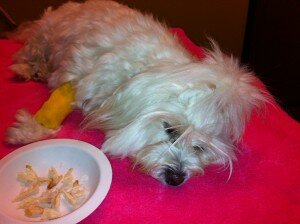
Glues may not seem like something we have to worry about too much in our pets, but they can actually cause pretty serious consequences if ingested. Instant glues or glues such as Super Glue, Gorilla Glue or products like them seem to have the most side effects. While they are not typically a toxic concern, they can lead to significant gastro-intestinal upset and irritation. In most cases if the ingestion is not caught soon enough surgical intervention will be necessary.
The image on the right shows an x-ray where the stomach is filled with foreign material. Arrows are pointing to the stomach full of the foreign material which in this case turned out to be glue. (Image Source)
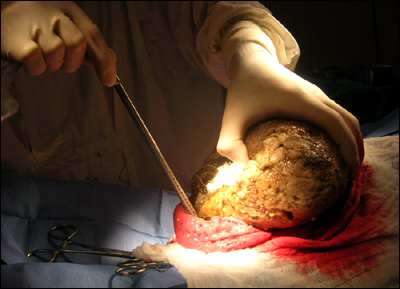
 As stated above there doesn’t seem to be significant toxic side effects other than mild gastro-intestinal signs. What is most concerning is that these glues are designed to expand on contact when applied to projects. The same holds true in the stomach only it is taken to an extreme with the moisture that is present in the gut. This forms a large firm ‘glue ball’ which makes it difficult to allow food to pass and can lead vomiting, diarrhea, and significant decrease in appetite. Due to the size many of these glue balls can get too (some get as big as a soft ball or rarely a basketball!), surgery is necessary to remove the obstruction.
 
This is a 'glue ball' being removed from a patient's stomach (Image Source)

If you suspect your pet has ingested one of these glue type products it is best to contact your veterinarian. The ‘glue ball’ can begin to form in the stomach very quickly and it is typically not recommended to make these patients vomit. The major concern is that if any glue is left in the esophagus a new ‘glue ball’ could form there which can be even more serious. Once surgery is done most patients will have no lasting effects from the glue. 

Friday, March 6, 2015

Breed Focus: Great Dane

Tall and regal are great words to describe the Great Dane (Image Source)
The Great Dane is another fairly well recognized giant breed. They were originally bred for boar hunting, but later were adapted to guarding larger estates. Typically they are very calm an docile, which is a good thing because if they stand on their back legs they are taller than most people!! With any dog this size, it is important to socialize at a young age and enroll in training courses so that everyone understand their role in the family. Once that is established they will prove to be a very loyal and excellent companion.
 
They come in a variety of different color patterns! (Image Source)
As far as health concerns go, there are several to consider prior to adopting this breed. Once of which is bloat. This is where the stomach can fill with air and become very uncomfortable, in extreme cases it will flip and cause a torsion. These conditions are emergencies! There are several things that can be done to minimize the risk. These include elevating food bowls, encouraging slow eating and drinking as well as waiting to exercise until at least 1 hour after eating. Some veterinarians may also discuss tacking the stomach which can minimize (but not fully eliminate) the ability for the stomach to twist.  
Even the puppies are a good size (Image Source)
Additional health concerns include hip dysplasia. This again seems to be more prevalent in larger breed dogs. It is a condition where the femoral head and inlet of the pelvis do not match up properly and can cause a large amount of discomfort. Genetics play a role in the development of these conditions, so if you are considering purchasing a puppy, ensure that parents have been cleared from the condition.
 
You may need larger furniture before bringing these big dogs into your home! (Image Source)

Great Danes have a very distinct look and for a large breed do not need a lot of intense exercise. Many will be content to sit on the couch with you and go on short walks throughout the day. Be sure to consider if you are interested in a puppy, that as they grow they can be very clumsy and fragile items may need to be kept up high. Also make sure you work with your veterinarian to determine the proper diet. Over-supplementation in fast growing, large breed dogs can actually lead to more joint problems. You may also have to consider the type of vehicle you drive as they may not fit in most cars. If all of this sounds like something your family can take on, this may be a great fit for you. For more information please visit the following websites here and here.  

Thursday, March 5, 2015

Doodle Days #41

This is Maggie. I love her!
Well folks I had another very exciting weekend! We had visitors!!! This time Maggie came along. She is a good friend of mine (I'm not sure I'm as good a friend of hers though). She doesn't always like to play with me. But that's ok I'm patient.
I'm at the ready whenever she wants to play...

I don't think she is ready to play yet!
I also don't mind sharing my toys. (I'm just a gentleman like that).

Maggie is loving my pig toy!
Once she warms up to me though we always have such a great time! I love seeing friends! We had another special friend come as well but I think I'll save her for next week. Her name is Nika and she has such a big personality she needs her own blog post.
I just want to be included!
Sometimes it is hard being the only boy in an all girls club, but I manage!

p.s. These excellent photos were taken by our  good friend Carole! She had great material to work with, if I do say so myself, but she really captured us in action all weekend!  Thanks for documenting our fun Carole!

Wednesday, March 4, 2015

Immune Mediated Hemolytic Anemia (IMHA)

Sometimes they will just seem sick and not interested in food (Image Source)
Immune mediated hemolytic anemia (or IMHA) is a condition where the body begins to attack and destroy the circulating red blood cells. Sometimes there is another underlying disease process that is causing the body to over-react and attack the red blood cells, but sometimes a cause is never determined. This condition can be very serious and not all patients will respond to treatment. It is important to implement aggressive treatment very quickly to improve the likelihood of a positive outcome.
Some owners may notice pale or light yellow gums (Image Source)
Symptoms at home may include weakness, lethargy, and decreased appetite. You may notice that the gums or tips of ears have turned a light yellow color. This is from the bilirubin that would normally be contained inside the red blood cells. Overall they may just act off and not like themselves. Once at the clinic, blood work can show if anemia is present. Again, the cause may not always be apparent, but we need to try to rule out as many causes as possible. This may require additional testing such as x-rays or ultrasound. If no cause is determined that treatment for IMHA may be initiated.
Depending on the severity of the anemia, a blood transfusion may be necessary. This may need to be done at a referral hospital under strict supervision. Other treatments will include medications such as steroids and cyclosporine that will help reduce the over-activity of the immune system. Sometimes antibiotics are also added to help further decrease the over-activity of the immune system. Treatment may last for months. Depending on the severity of the condition, any underlying causes and the patient’s response to treatment.
Once quick test in the hospital is the slide agglutination test. If clumping is noted IMHA is much more likely. (Image Source)
Once patients are stabilized, typically medication will be slowly weaned and eventually stopped. Again, this could be many months of treatment. Also future medications and vaccinations will have to be carefully monitored and timed so as not to over excite the immune system. Once a patient has had IMHA it is important to monitor for symptoms again. It is possible to have recurrent issues and if severe patients do not always survive treatment. For more information on this condition please visit the following website here.  

Tuesday, March 3, 2015

Toxin Tuesdays: Lawn and Garden Products

It is ok for your pet to help you garden, just make sure you are keeping an eye on him! (Image Source)
Although the weather doesn't seem like it here in central Illinois, spring will eventually arrive. With springtime comes gardening. Today we are going to focus on several fertilizers and yard products that we need to be aware of in regard to our pets. One of the most important things is to either keep the bag the product came in or take a picture of it and the active ingredients. This will help tremendously if accidental ingestion occurs. There are so many different lawn care products and without knowing the active ingredients it will be difficult to determine if it poses a threat to your pet.
This guy looks pretty happy, and he will stay that way if he doesn't chew the mulch! (Image Source)
Some of the fertilizers used in gardening can be very appetizing to our pets. This can include cocoa mulch and bone or blood meal. Cocoa mulch if eaten in large enough quantities can lead to vomiting and diarrhea as well as muscle tremors. It may be best to avoid this product if you have pets or restrict their access to it. Blood and bone meal mainly cause gastro-intestinal irritation, but can make other items more appetizing. For example if flower bulbs are planted in this product dogs may try to eat them. Although most bulbs are not toxic they could lead to a gastro-intestinal obstruction which can be just as serious. If your pet begins to eat either of these products please contact your veterinarian immediately.If gastro-intestinal side effects are the only issue observed there are several medications that can be prescribed to help soothe and calm the upset system.
Sniffing is ok, but eating is best avoided (Image Source)
Most other fertilizers pose very little risk to our patients in terms of toxicity. While they may cause upset stomach, many of the ready to use variety are fairly safe. This doesn't mean your dog should just go out and eat a bag of fertilizer. It means that if an accidental exposure occurs then most of the time the symptoms will be mild and limited to vomiting or decreased appetite. In some cases if the gastro-intestinal upset is severe enough it can lead to pancreatitis which can require hospitalization and supportive care. This is why a call to the veterinarian is important to upset stomachs can be dealt with immediately and hopefully before they get out of hand.
Everyone is excited for spring and being outside. Proper supervision of your pet can avoid a lot of trouble! (Image Source)
As with most products, if you are concerned that your pet may have ingested something on accident always contact your veterinarian or the ASPCA Poison Control Hotline. 

Friday, February 27, 2015

Breed Focus: Japanese Chin

This does look like a breed made for royalty! (Image Source)
The Japanese Chin is a lovable little dog that can make an excellent addition to most families! This is because their sole purpose was being bred for companionship. They date back to China where the royalty bred them to be companions for the women of the court. While they may be a little shy around strangers, with proper socialization when younger they can make for a very friendly pet! Who wouldn't want a pet made for royalty?
 
Their cute face makes it look like they are always up to something! (Image Source)
Their coat will require regularly brushing and bathing. If a brushing routine is instituted they will be unlikely to need further trimming or cutting. There are a couple of health conditions to be aware of prior to bringing a Japanese Chin home. One is that as with many small dogs they can have luxating patellas. This means that the knee cap is not secure in place. In minor cases it can be monitored and medically managed.  In more advanced cases, surgical correction will be necessary.  They are also considered a brachycephalic (smushed faced) breed. So they can be prone to more breathing problems and are more likely to overheat if left outside.
 
As puppies they are very cute and playful! (Image Source)
Overall the Japanese Chin are a great pet! Their small size makes them perfect for apartment living, but they will do well anywhere there are people to love them. For more information on this great little breed please visit the following website here and here.


Thursday, February 26, 2015

Doodle Days #40

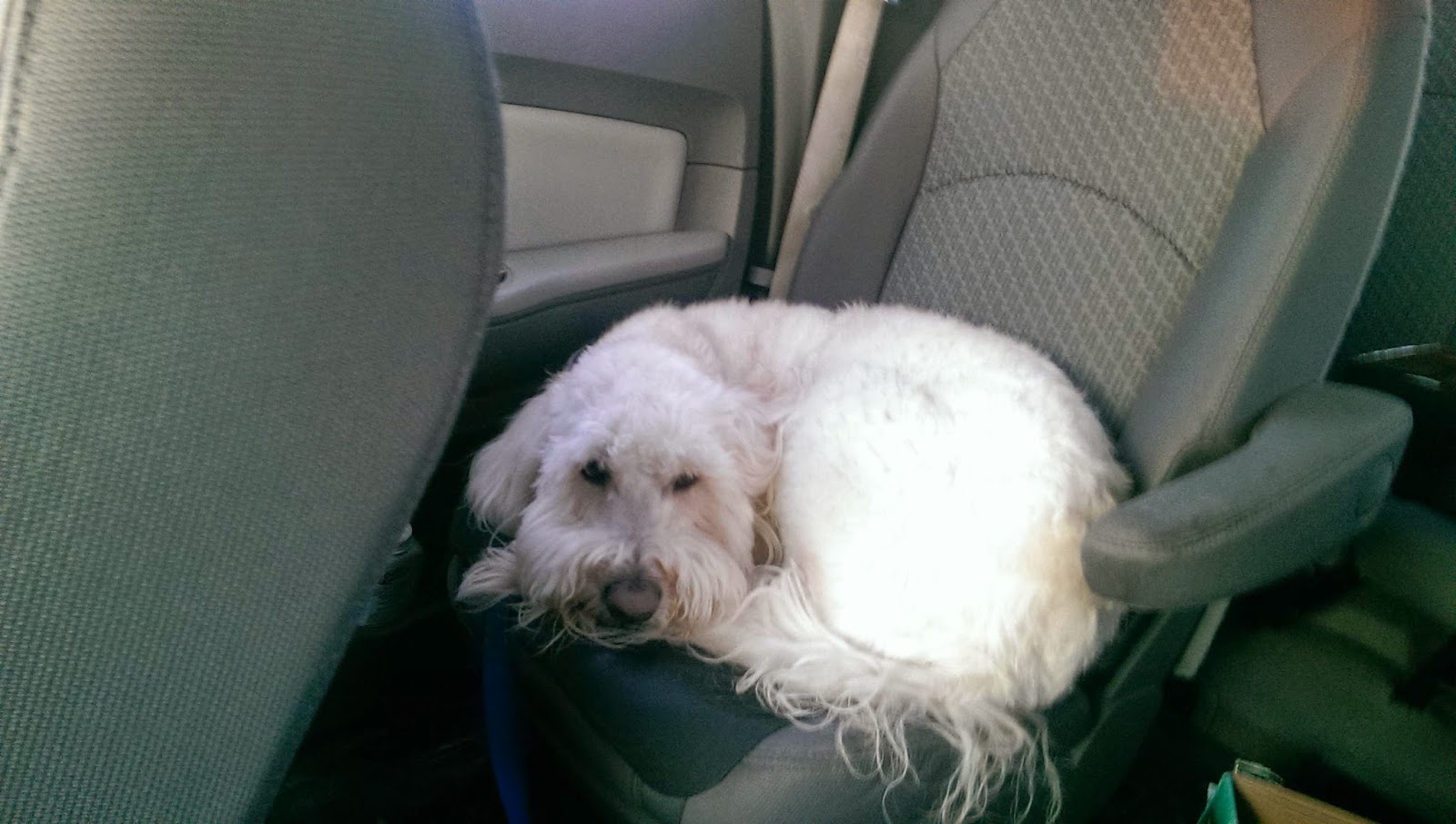
Well I'm pleased to say I had a fantastic week on my little vacation! I settled in for the short car ride to my friend's house!

I got to visit her work and catch up with some of my buddies! This is Lilly, she is really good at playing tug of war!

I get pretty tired because I'm not used to quite this much excitement. Sometimes you just have to nap!

What trip would be complete without a selfie?

I just settled right in and made myself at home. Hank is usually pretty grumpy, but I won him over! He shared the bed with me and everything!

Now I'm home and we are back to the normal routine!