Wednesday, February 4, 2015

Focus On Joints: Hip Dysplasia

(Image Source)
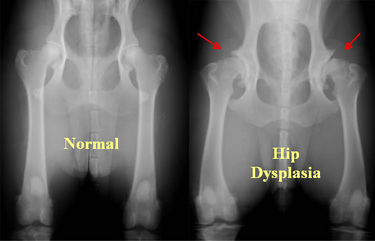
Hip dysplasia may be one of the most well-known and well discussed joint diseases affecting our pets. This condition occurs when the hip joint is malformed and will not joint normally. The femoral head does not fit properly into the acetabulum of the pelvic bone. Overtime this will lead to discomfort and can sometimes alter the normal gait or stride.  It is typically associated with large breed dogs but can affects animals of any size.  
 
An example of hip dysplasia in the left hip of this dog (Image Source)
There is a genetic link with hip dysplasia that can be passed through many generations. When looking for a new pet, if going through a breeder it will be important to ensure that they have had the hips certified free from the condition.  This will be especially crucial in large breed dogs.  X-rays are required to assess the hips, and most of the time sedation may be necessary. If your pet is already symptomatic x-rays can be done at any time to view the joints. If there are no symptoms and they are being assessed for breading stock, x-rays are typically done around two years of age. This is when all growth should be complete and the joints can be adequately assessed. For hips to be certified, the x-rays are sent to the Orthopedic Foundation for Animals.
In some cases referral may be recommended to an orthopedic surgeon to see if hip replacement is an option. This is a very invasive and expensive procedure so most owners prefer management. Once hip dysplasia is diagnosed there are several options for management. These include joint supplements such as glucosamine/ chondroitin, pain medications and fish oil capsules. All of these work to keep the joints lubricated and more comfortable when our pets are showing symptoms.  There are also several diets that have been shown to help with joint disease. Another big aspect of management to remember is that these dogs need to be kept lean as any extra weight will put more pressure on their joints and can cause even more discomfort.
For more information on hip dysplasia please visit the following website here. 


Tuesday, February 3, 2015

Toxin Tuesdays: Chocolate

No, just no! chocolate is not good for out pets! (Image Source)
Chocolate can be very tempting for our furry friends! It is one of the most common toxin exposures we see in practice. Many households have chocolate so most pets have easy access to this product and if left alone will find a way to eat it. The good news is the vast majority of owners are aware that chocolate is not good for their pets, but may not know what to do in case of accidental exposure. Today we will look at the different types of chocolate and what chocolate toxicity can look like.
 
These chocolates would tempt anyone! Keep them in a safe place! (Image Source)
To begin, we first need to realize that there are many different types of chocolate products out there. They can range from white chocolate (which is mostly sugar and not any real chocolate) all the way to baking cocoa which is unsweetened and probably the worst chocolate product our pets could eat. Milk chocolate and dark chocolate are somewhere in the middle of this spectrum. Also remember some products that we think have chocolate in them, may have minimal amounts. For example Reese’s pieces, have very small amounts of chocolate with more peanut butter present. Noting the potential amount and type of chocolate ingested is crucial to treatment and outcome.
 
Holidays like Halloween and Easter show a rise in pet chocolate exposure (Image Source)
Why is chocolate so dangerous to our dogs but not to us? The culprits are caffeine and theobromine, both of which are found in varying amounts in all forms of chocolate. Both are metabolized in the liver and can therefore take a toll on this very important organ. Since they are absorbed almost every system without your pets body can be affected by chocolate.
Depending on the amount absorbed the signs may be mild gastro-intestinal upset such as vomiting and diarrhea. If it is a large amount of milk chocolate, or a smaller amount of the more potent dark chocolate you can start to see evidence of tremoring, seizures, and a very increased heart rate.
 
He may really want those cupcakes, but it is safer to just say no! (Image Source)
If you suspect (or know) that your pet has eaten some chocolates, it is important to call your veterinarian. If possible they will want to know the suspect amount, type and time of the exposure. This will determine treatment. If it will be mild with gastro-intestinal signs many times those can be managed out of the hospital. If the signs are more severe, they may need hospitalization. It is always a good idea to check liver values right after exposure and then throughout treatment to ensure that the liver is not having any negative effects. If ingestion is known to be recent (within 2-6 hours) depending on the patient your veterinarian may induce vomiting to try to remove as much of the chocolate as possible.


Although most of us love our sweets, it is very important to keep them away from our pets. In the event of an accidental exposure, the quicker treatment can be started, the better chance we have for a positive outcome. For more information you can visit this website here or here 

Friday, January 30, 2015

Breed Focus: Labrador Retriver

Handsome and sturdy Labradors can make excellent pets! (Image Source)
Labrador Retrievers (labs) are consistently in the top ten dog breeds registered with the American Kennel Club (In fact they were the number one breed in 2003, 2008, 2012, and 2013). Their lovable, goofy personality and sturdy build seems to draw many owners to them. Originally they were bred to help fisherman, however over the years breeding led to an increase in their retrieving qualities which helped lend them to hunting various game. They are an energetic dog and will need a lot of exercise but they can make excellent intelligent pets.
Three main colors are solid chocolate, solid black and solid yellow (Image Source)
 While they don’t require much grooming, they do love water and may try to jump in any body (lake, pond, puddle) of water they see. This may lead to more frequent bathing but can easily be done at home for most people. Another important thing to remember is that they are RETRIEVERS. It is not uncommon for them to carry things around in their mouths. One of the top reasons veterinarians see labs is because they have eaten something they should not. Keeping a close eye on them and offering appropriate toys and training can help minimize the risk of ingesting unwanted materials.
 
They need regular exercise to keep their energy in check (Image Source)
As far as heath concerns go labs do seem to have a genetic pre-disposition for hip and elbow dysplasia. Researching the breeder and verifying that the parents of your potential puppy have been screened can help minimize the risk. While not a genetic risk normally, labs tend to be rambunctious and may need to be seen for minor injuries such as cuts or lameness. Again proper supervision, training and regular controlled exercise may help decrease the frequency of veterinary visits.
 
Water and Retrieving, two of a labs favorite things! (Image Source)
Overall this is a great breed for many families. They can be destructive if not given a proper outlet for their energy, which may be a reason we see many end up in shelters or being re-homed. With proper training (for the family and the pet) everyone can enjoy a happy and healthy life! For more information about Labrador retrievers you can visit the following websites here and here. 

Thursday, January 29, 2015

Doodle Days #36

Do you ever get so tired you just have to rest your head?

I know I do.

I can rest my head on just about anything!

especially if there is food around! (The sad eyes rarely work, but i have to try!)


Usually I just want some attention, it seems to work!

Wednesday, January 28, 2015

Focus on Joints: Cruciate Ligament Injury

(Image Source)
Probably one of the most common joint related injuries we see in general practice is a tear (or partial tear) or the cruciate ligament. This ligament helps to stabilize the knee joint by keeping the femur and tibia in line. It is very similar to the ligament many pro-athletes injure commonly called the ACL (anterior cruciate ligament in people). There are two parts to the cruciate ligament. In pets these are call the cranial and caudal cruciate ligament. Typically we see injuries associated with the cranial portion. When this ligament is torn or injured the knee loses its stability and can become very painful.
Limping on rear leg could indicate injury to the cruciate ligament (Image Source)
Typically pet owners will notice a sudden lameness in a rear leg. If left alone many times it will slightly improve but still cause discomfort during exercise or after extended periods of laying down. Pets may not put any weight on the affected leg or they may only toe touch or put partial weight on it. Large breeds tend to be over represented with this injury but smaller dogs can be affected as well. Obese dogs are MUCH more likely to damage the ligament then those of an ideal body condition.
Extensive shaving is required prior to surgery on the knee (Image Source)
There are several indications that the ligament may be damaged. On physical exam there may be swelling around the knee or a ‘click’ feeling when it is placed through the range of motion. Because this ligament is used to stabilize the femur and tibia, if it is damaged there may be laxity or extra movement in the joint. X-rays may also help indicate there is an issue. While x-rays cannot show the ligament they may reveal evidence of an injury. This could mean fluid on the joint, the tibia sits more cranial than normal, or that the fat pad that is normally centrally located has moved.
No matter which procedure cage rest will be necessary to help healing (Image Source)
There are several treatment options available and it is important to work with your veterinarian to determine which will be the best for your pet. Depending on the size of the dog and nature of the injury there are several surgical corrections that can help stabilize the joint. Many veterinarians may even refer to an orthopedic surgeon if they do not feel equipped to correct this injury. While some dogs will respond to STRICT cage rest and leash walks only for 6-8 weeks. Surgical correction is still the ideal way to correct this injury. Without surgery pets are much more likely to develop arthritis sooner and could even deal with chronic pain for the rest of their lives. While surgery is invasive and can be expensive many times it is the best option.

For more information on cruciate ligament injury you can visit the following website here. 


Tuesday, January 27, 2015

Toxin Tuesdays: Salt

One of the unexpected sources of salt toxicity in pets (Image Source)
Salt may seem like an odd toxin to our pets but it is definitely one to consider due to the potential profound effects on our pets.  One way to develop a salt toxicity is to have no access to water. This is not common in our household pets but can happen in livestock especially if water sources become frozen. If you pet spends a good amount of time outside ensure that their water source is fresh and accessible. There are other causes of increased salt around the house that may surprise you. Items like homemade play dough (or play dough ornaments), paint balls and salt used to melt snow have very large amounts of salt and can cause issues if ingested by our pets.
 
Paint balls are another source of salt toxicity in our pets (Image Source)
Symptoms of a salt toxicity can vary depending on amount and time of exposure. In mild cases you may only see some gastro-intestinal upset such as vomiting, diarrhea or lack of appetite. These tend to happen fairly quickly after a toxic level is reached, usually within hours. From there symptoms can progress to neurological signs. These would include tremors, stumbling, seizures, or in extreme cases a coma.
While pets affected by salt toxicity do need to be re-hydrated it needs to be done under veterinary supervision (Image Source)
 To confirm the diagnosis, blood samples will be taken to assess the sodium level. If over the threshold, treatment should be instituted immediately. While this is a serious condition, and aggressive treatment is needed, it must be done appropriately. In this case overloading with fluids to dilute the sodium will not work, in fact it may make the patient worse. It has to be done slowly with frequent blood draws to assess the sodium levels. If treatment is initiated prior to severe symptoms it is possible to have a positive outcome and unlikely lifelong effects. Unfortunately many cases reach the late stages prior to us noticing anything is wrong and many times treatment will not help them.


It is important to monitor your pets to prevent their exposure to unwanted materials. Even if it does not seem appealing to us (because really who would want to eat ice salt or a hard play dough ornament) pets tend to find these items irresistible. If you think your pet may have been eaten something containing a good deal of salt it is best to contact your veterinarian immediately. 

Friday, January 23, 2015

Breed Focus: American Staffordshire Terrier (Pit Bull Terrier)

Pit Bulls are often misunderstood but can make great pets for the right family (Image Source)
The American Staffordshire Terrier, more commonly known as the Pit Bull Terrier, is probably one of the best recognized breeds in our country today. This is thanks in part to news stories of dog fighting rings and the perceived viciousness of the breed by the public. Overall this breed is fairly misunderstood. As with any breed with the right home and training they can make an excellent pet and can be some of the biggest cough potatoes and best cuddlers among the canine population!
 
While they can have bursts of energy, many pit bulls are couch potatoes (Image Source)
Pit Bulls have received a bad reputation largely from their use in illegal fighting operations. They strong build and determination as well as extremely strong jaws make them ideal candidates for this disgusting trend. Their strong build but smaller size did help them with hunting a variety of pests from rats all the way to bears. They love people and are very loyal. One thing to note is that some maybe more reactive to smaller animals (cats, small dogs) so if you are considering this breed in a house that already had pets make sure they have been tested safe around other animals.
 
That's a whole lot of cuteness coming at you! (Image Source)
As far as health conditions go there are few to be aware of in the American Staffordshire Terrier. These include hip dysplasia. The breeder can screen the parents which if cleared can minimize the risk of your puppy developing  hip dysplasia. Also as a breed they tend to be very prone to allergies. This includes allergies to fleas, food and environmental allergens such as pollen, dust mites and dander.  It is important to remember that both of these conditions will likely be managed for the duration of your pets life rather than cured.
 
They tend to love people especially their family! (Image Source)
Pit Bull Terriers have a very bad reputation and it is largely undeserved. Most of them aresweet, calm and loyal to their family. They are more likely to flop over on their back for a belly rub than to viciously attack for no reason. It is VERY important as with any breed to institute a training regimen from the beginning so they will be well balanced and happy. This will minimize the chance of unwanted behaviors developing. As with any breed if pushed or frightened they can become more aggressive, but this is not exclusive to pit bulls. Before getting a pit bull you will also want to check your living arrangements. Some rental properties and cities have bans on specific breeds.
 
Simply Adorable (Image Source)

For more information on this breed please visit the following websites here and here.