Friday, May 20, 2016

Cat Visits: reducing your cat’s stress when you travel to the animal clinic

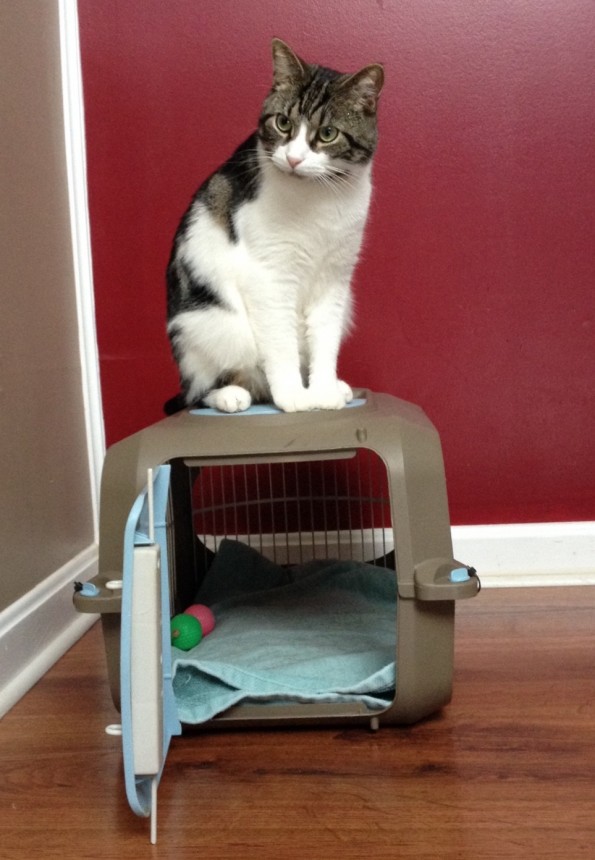
Recently a client shared their terrible and harrowing experience of getting her cat to the vet clinic yearly.  The client has to shut the doors, get the cat out from the bed, and then shove the cat into the cat carrier.  I think many of us could agree, that while this is stressful for you, and the cat, this is definitely not a unique experience.  Many of our clients with cats come in a few minutes late for their appointment, with battle scar scratches on their arms, because this is commonly a trial by fire task.
We would like to share a few tips on how to make vet trips less of an ordeal for your cat.

1. Feliway.  We cannot applaud the concept of this product enough.  Feliway is a calming facial pheromone scent for you cat.  It may not work for every cat, every time, but we have definitely seen it help.  You can plug a diffuser (its like a Glade plug-in) in all the time for a stressed cat, or plug the diffuser in a few days before an anticipated stressful event like a clinic visit.  The spray or wipes can be used directly in the cat carrier 1 hour before you put the cat in.  Again, it may not 100% decrease the stress, but it will definitely bring the level down a few notches.

2. Desensitizing for the carrier.  Please, take the time to desensitize you cat to the carrier, so it is not such a dramatic experience for them to travel inside it.  Leave the carrier out periodically, add food or treats inside; you can even leave familiar bedding or warm cuddly blankets.  Allow the cat to investigate the carrier at their own pace, and reward the cat for showing any positive interest in the carrier.  If its appearance isn’t always followed by a struggle, and a stressful visit to the vet, your cat will be less worried every time it sees that dreaded box.  
3. Desensitizing for the travel.  If it’s the car ride your cat despises, do practice runs for that as well.  Get the cat in the carrier, drive around for a short car trip, come home, and reward your cat grandly with attention and treats to let them know that travel isn’t always going to equal a stressful outcome.  Your veterinarian can even offer “happy visits” for your cat (or your dog), where we check your pet in to an exam room, and a technician or veterinarian comes in, talks with you, pets the cat, or gives a few treats, and they leave without any stressful injections, or handling.  This can do wonders for breeding trust between the clinic staff, you, and your pet.
4. Understanding.  I think most importantly, owners need a good concept of why they are bringing the cat in for yearly visits.  It is not “just” for that shot that we recommend we see your cat yearly.  We want to do a comprehensive physical examination, and get a full history on how your cat has been doing since their last visit, so we can intervene on any early signs of illness, or concerns.  We aim to keep your cat as healthy as possible and live a long, peaceful life.  In addition, if you are only coming in that one time your cat has become incredibly ill, a visit to the animal hospital is going to be that much more stressful and traumatic for a cat that has never traveled from home in its life.  

5. Getting an unwilling cat into a carrier.  Sometimes, despite your best efforts, your cat still doesn’t trust the travel carrier.  Bring the carrier into a small room, and then bring your cat into the room and shut the door, limiting escape.  Gently lower your cat into a carrier with a top door, or stand the carrier up and lower into the door.  If you have a plastic carrier that comes apart, consider taking off the top, putting the cat in the bottom, and then putting the top back on to secure the cat.  Remember, no matter what process you chose, go slowly, and calmly, as cat’s can sense your stress or anxiety.

Thursday, May 19, 2016

Canine Influenza: A Brief Look at What Pet Owners Should Know


The canine influenza virus made big headlines last summer as it reached almost epidemic proportions in Chicago. This was the first time the United States had experienced a new strain of the virus and it seemed to spread very quickly. Recently, central Illinois has seen the virus resurface. So what should pet owners do to help keep their furry friends safe? 
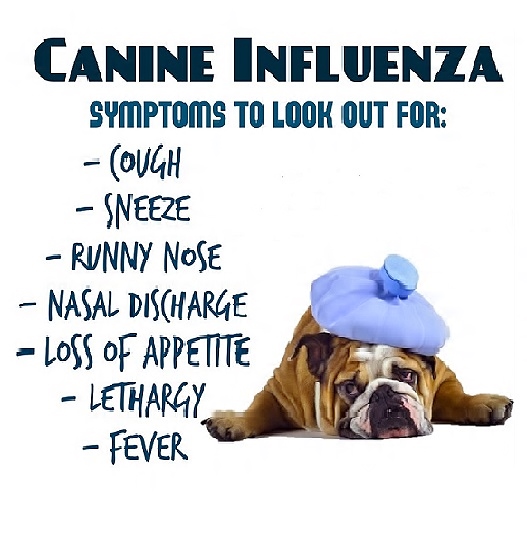
At the first sign of these symptoms, you should call your veterinary clinic. (Image Source)

It is important to remember that the influenza virus is spread through coughing and sneezing. Many dogs will shed this virus before they are even symptomatic themselves. This is why such a large number of pets can be affected so quickly. In the mild form of influenza a dog may have a cough lasting from 10 to 30 days. If the condition progresses it can lead to a serious pneumonia which may require hospitalization. The vast majority of pets will recover, however there have been some reports of pets passing away. These cases are rare and usually limited to the very old or your, or those with chronic conditions. However at the first sign of coughing, lethargy or decrease in appetite it is best to have your pet seen by a veterinarian. 
Influenza is very easily spread, so veterinary staff needs to take extra precautions during an outbreak. (Image Source)

Remember this is a virus, so unless there is a secondary bacterial component, antibiotics will typically not be helpful. Most of the time treatment is supportive care. This means making sure the pet stays hydrated and combating the fever. If there is a bacterial component then antibiotics will be prescribed to help your pet. 
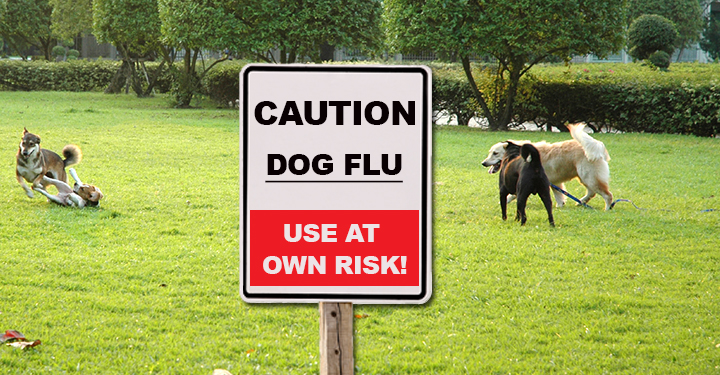
Since this virus can spread quickly, it is best to keep your dog away from other pets until the outbreak has subsided. (Image Source)

If there is a known outbreak in your area, there are several ways to help keep your pet safe. One of the best options is to keep them home whenever possible. While your dog may love the dog park, or getting groomed, boarding, etc. if the influenza virus is circulating the best thing you can do is keep your pet away from other animals until the virus has been contained. We are also fortunate to have vaccinations for the two most common strains of the virus. These are the H3N8 strain and the more recent  H3N2 strain. Typically if your pet has not received these vaccines before, they will need to receive an initial dose and booster that 2-4 weeks later. After that this series, they can become yearly vaccinations. Unfortunately, there is not currently a combo vaccination containing both strains so these are two different shots, but seem to provide good coverage for the most common strains seen in the United States. As with the any virus though, it is possible for new strains to develop, so we still recommend monitoring pets closely for symptoms of influenza, even if they are vaccinated. 

We all want to keep our pets happy and healthy. If your pet frequently visits dog parks, boarding facilities or day cares, it is a good idea to talk to your veterinarian about what vaccines are right for them!

With the outbreak in Central Illinois, there has been a lot of information available to pet owners regarding Canine Influenza. There are several good websites here and here that contain excellent information for pet owners. As always, if you have any concerns it is best to contact your veterinarian. 

Tuesday, May 17, 2016

Nail trim dos’s and don’t’s

Nail trimming.  Even though it is not what people think of a medical condition, it’s often an appointment we will see multiple times a day on our schedule.


Why don’t more clients trim their dog’s nails at home?
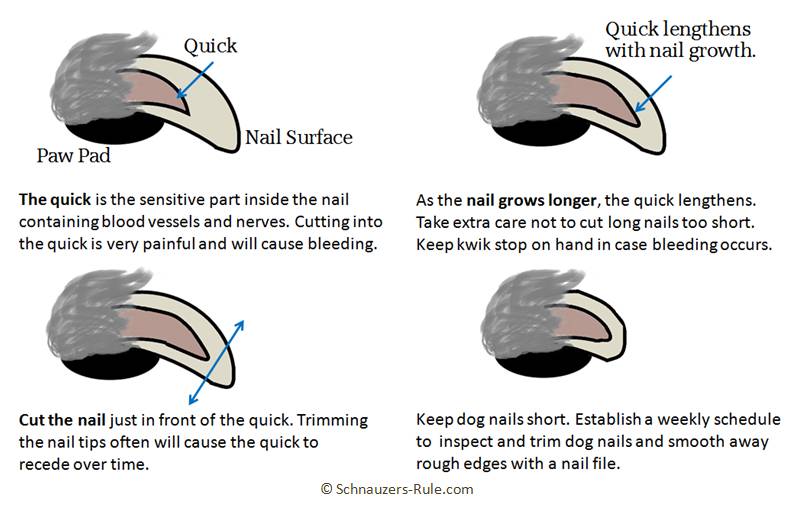
Many dogs despise nail trims, and this is probably the number one reason people cite as to why they bring them in to the clinic or the groomer for nail trims.  There are definitely ways to condition your dog to accept this into their grooming routine.  The first, and best way to get dogs to accept nail trims is to start desensitizing them to having their feet touched, and their nails clipped, when they are puppies.  Yes, they are squirmy, and wiggly, and small; but this is when they are most willing to learn and accept this as not a scary process.  In more mature dogs, this can be done with training and positive reinforcement, even if your pet is no longer young and impressionable.  We often recommend trimming just a few toes at a time, and then offering rewards/treats for good behavior if the experience went well, and then trying for more nails a few days later.  If you keep up this routine, everything does tend to stay trim and short.

Another reason people don’t do their dog’s nail trims at home is because of the risk of bleeding.  They have experienced one bad episode of a bleeding toe nail, and they are just too nervous to attempt a home nail trim again.  The nail is basically a hardened layer of keratin around an inner pulpy nail core, and inside all of that is a small blood vessel that runs done the length of the nail, called the quick.  There are definitely ways to avoid the quick, and the resulting bleeding, but it is important to remember that accidently cutting the quick leads to minor discomfort and not tragedy.  The “quick stop” powder that your groomer or veterinary clinic uses can be obtained where most grooming supplies are sold, and is a quick and effective way to control any bleeding mistakes.  Ways to avoid the quick include only cutting the “hooked” part of a dark nail, or looking for where the pink color stops and the clear part starts of a clear/white nail.  If the vessel is growing through a long length of the nail, frequent clipping of the nails in small increments can eventually move that vessel back so you can get the nails shorter.


If these tips and tricks don’t entice you to take on your pet’s routine pedicure treatments, routine walks on the sidewalk or any rough terrain can wear down those nails without constant need for nail trimming.  (However, be sure to avoid hot concrete during the summer time, as this can cause foot burns.)  Dremmeling (or grinding) the nails works in the same way, and often pets tolerate this type of trimming much better than the cutting action of nail clippers.


Why do your dog’s nails need to be trimmed?

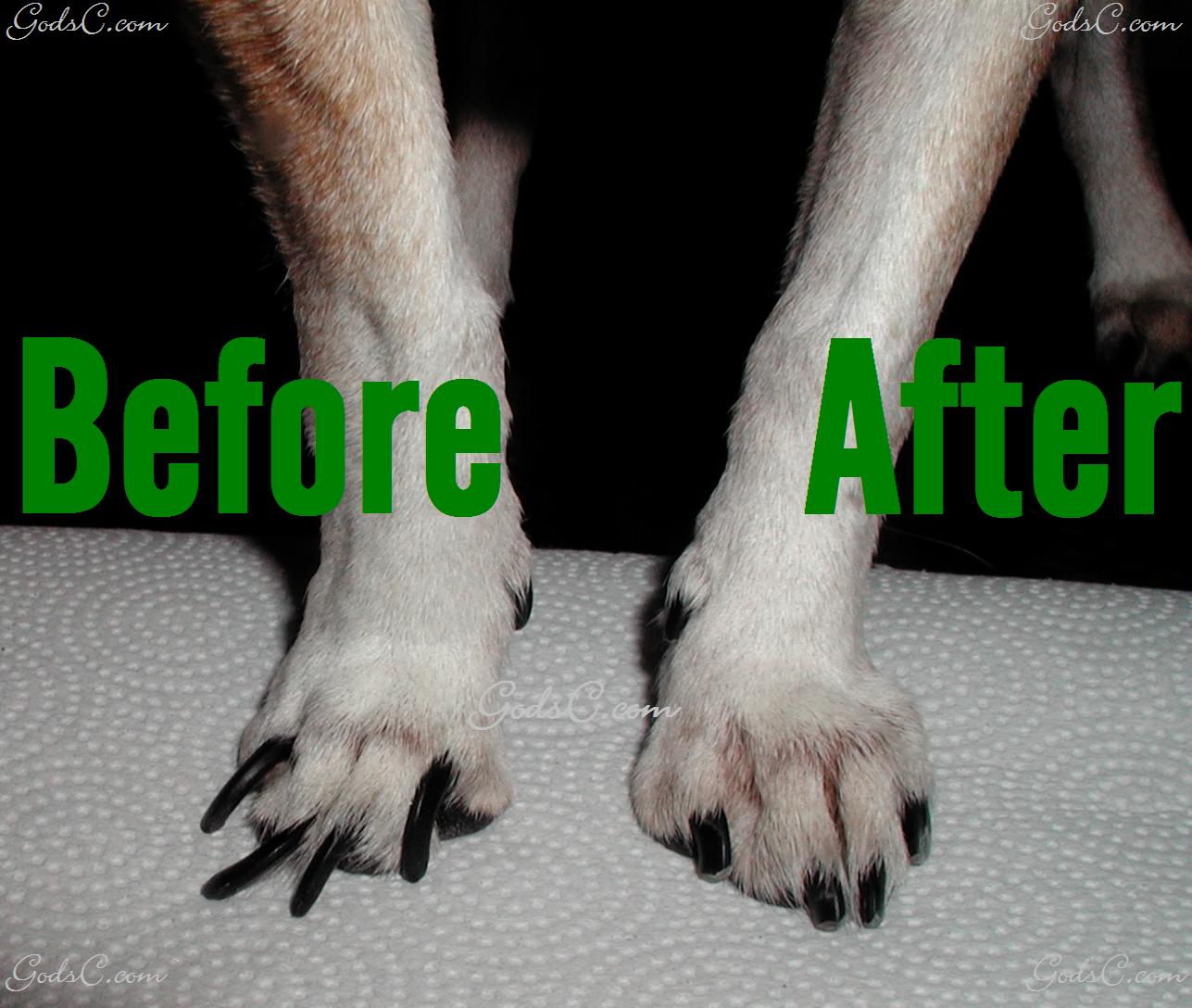
Long, untrimmed toe nails actually can become a medical condition.  Long nails can catch on things and rip or break, causing exposure to that inner nail bed, predisposing your dog to infections and significant pain.  Smaller dogs that don’t walk often on harder surfaces, or are carried often,  can even have nails that grow around into the bottom of their feet (paw pads) causing pain, open sores, and infection.  Dew claws (or side claws) can do this as well and are a big concern.  Nails that are too long can make walking difficult, because they don’t allow the feet and toes to properly hit the ground with the right positioning, and can often make it difficult to gain traction for older, arthritic pets.


How often do my dog’s nails need to be trimmed?
The timing and frequency of nail trimming is certainly variable between dogs, but on average, every 4-6 weeks or so is a good starting point.  Some dogs that have previously grown out their toe nails may need trimming every 2 weeks to try to move back that quick vessel and try to get them as short as needed.  Some dogs walk enough on sidewalks that they may only need a trimming every couple of months, or may never need a trimming depending on how much rough surface they walk on.

Thursday, April 14, 2016

Product Focus: Hill's Prescription Diet C/D Multicare Stress

There are a lot of products and medications available for your pets. How do you know what each one is for and if it is the right choice for your pet? The best way is to ask your veterinarian! We are also going to take a look at certain products and what the do and what possible side effects they may have. The more information you have, the better decisions you can make for your pet!

This is a great new option for cats with urinary issues! (Image Source)

Today we are going to look at a prescription diet for cats. It is called C/D Multicare Stress. Although it is a long name, it also comes with a long list of benefits. Many pet owners shy away from prescription diets as they are afraid of the price tag that comes with them, however these foods have been thoroughly studied to provide the results they claim. In fact, most prescription diets come with a 100% guarantee that you can get your money back if your pet does not like the food or you are unhappy with the results. Talk to your veterinarian that has prescribed the food to make sure this is an option for you!
This balanced diet is safe for all adult cats to eat! (Image Source)

C/D Multicare Stress is designed to help address one of the biggest problems we see in our indoor cats. That is urinary issues. This could be cats that urinate outside the box, cats that are straining in the litter box or in emergency situations cats that cannot urinate. There are many reasons cats may struggle with litter box issues. Your veterinarian will likely recommend testing to rule out urinary tract infections, urinary stones or kidney disease. Once the reason for the urinary issues has been established, many times a dietary change can become an important part of therapy.
There are some really great ingredients that can help your 

The great thing about C/D Multicare Stress is that it can help with many of these medical issues but can also help with some behavioral components. One great aspect of this food is that in some cases, it can dissolve struvite stones (a common stone that cats can develop) within seven days. It also works to prevent the development of the certain stones. Many cats will with urinary issues will have an underlying issue with stress. This could be from their environment or internal stress. C/D Multicare Stress is designed to help combat this as well. Ingredients such as tryptophan (like what is found in Turkey!) can help your cat to relax. Omega 3 fatty acids can also help calm down certain inflammatory processes throughout the entire body. When used in conjunction with environmental enrichment strategies you could see a much happier and well-balanced feline!

We want our all feline friends to be this happy and sometimes a prescription diet can help! (Image Source)

Prescription diets can be a very valuable part of treating and managing certain conditions in our pets. To learn more about C/D Multicare Stress, you can visit their website here. If your cat is having issues with the litter box, we would definitely recommend a visit to the veterinarian. For information on Feline Cystitis or other urinary issues you can visit veterinary partner's website here.

Friday, April 1, 2016

Happy Visits!

Some pets are really intimidated by the vet's office, here are some ways we can help! (Image Source)

It is no secret that many pets do not like coming to the veterinary clinic. We joke sometimes saying they have white coat syndrome, but this can actually be quite serious. It is sometimes the reason many of our pets (especially cats) do not get the routine care they need. Owners begin to feel bad that their pets are so scared and stressed when they come to the clinic, so many times it is avoided all together. While there are options in some areas for house visits or mobile veterinary services, that is not always possible. So what can be done to help our pets? One option is considering happy visits!
We can't blame our pets for being scared, but we can help make veterinary visits a little less stressful (Image Source)

What is a happy visit? A happy visit is when your pet comes in and doesn't have anything painful or scary done to it. Maybe we give some treats, maybe we play with a favorite toy. Whatever your pet likes we make that happen at the clinic. Depending on your pets stress level, this will determine how involved the visits need to be. For example, if your pet is stressed before it even gets in the car, we need to work on desensitizing your pet to the car ride (or carrier for cats). Leaving the carrier out year round so your cat is used to it can make travel much easier. You can also offer treats and toss toys in there throughout the year so it is not a scary place. If your dog is scared of the car, reward them every time they go near it, maybe they get half of their meal near the car, and slowly work your way up to just sitting in the car and getting back out. Then over time (and each pet is different so this could be weeks or months) you start driving to different places and rewarding them.
Treats and special rewards can help make visits a little less stressful! (Image Source)

Sometimes our pets may need a little more help than just treats and rewards. There are products available that can help! Phermone sprays such as Feliway and Adaptil can help calm anxious pets when used appropriately. There are also supplements, such as Composure Pro, that help relax your pet without sedating them or having any harmful side effects. Sometimes we need to do a combination of therapies to help calm anxious pets. It is important to remember that patience and hard work pay off! Definitely ask your veterinarian for their recommendations.
When pets are more relaxed, it makes everyone happy! (Image Source)

Once the pet gets to the clinic we may start small just offering treats and letting them leave. Or maybe getting them on the scale is a challenge, so we work on treats and petting or special rewards near the scale. Overtime maybe we have them visit with the doctor or technician so they get used to strangers handling them. This will help when they need to come in for a medical appointment to make the clinic less intimidating.
This pug seems ok with his examination! (Image Source)

It is important to know what motivates your pet. In some instances it may not be food but rather play or exploration. We have one special kitten that didn't seem too interested in treats, but loved his toys. So with every nail trim we set aside time for him to play/ explore our exam rooms. While he may never love coming to the clinic and getting vaccines, he is definitely not intimidated and not fighting his owners to get here. That is a win-win for everyone.
While not all patients will be this relaxed, we can definitely make them more comfortable with each visit! (Image Source)

Although happy visits may take a little bit of time and commitment, they will reap huge rewards for your pet in the future. If you are stopping in to pick up their monthly flea/ heartworm or just driving by we always encourage you to stop in with your pet, in hopes of making their next visit less stressful.

Tuesday, March 29, 2016

Product Spotlight: Trifexis

There are a lot of products and medications available for your pets. How do you know what each one is for and if it is the right choice for your pet? The best way is to ask your veterinarian! We are also going to take a look at certain products and what the do and what possible side effects they may have. The more information you have, the better decisions you can make for your pet!

Today we are going to look at Trifexis!
Trifexis is a great option for dogs to help prevent common parasites (Image Source)

Trifexis is a tablet for dogs that helps prevent fleas and heartworms. It is recommended that this medication be given on the same day each month. Many dogs will find the taste appealing. Although it is beef flavored, it actually contains hydrolyzed soy as well as pork protein. This may help many dogs with specific food allergies. However, if your pet has known food allergies it is best to work with your veterinarian for a specific plan for you pet. Trifexis seems to be best tolerated when giving with a meal.
Trifexis has many jobs! (Image Source)

There are many benefits to Trifexis. One is that it has proven to work quickly against fleas. Many times within several hours of administration, you will start to see a large population of live fleas die off. Due to this fast action, adult fleas will be killed before they are able to lay eggs, which in turn helps decrease the population in your pet's environment. It is also very effective against preventing heartworm infestations. It is recommended that all pets be heartworm tested negative prior to starting heartworm preventatives and the American Heartworm Society recommends once yearly testing for all pets. You can find out more about the American Heartworm Society here. Another benefit of Trifexis is that it helps treat and control hookworms, roundworms and whipworms. These are some of the most common intestinal parasites we see in our pets.
These little tablets pack a big punch against common parasites! (Image Source)

As with many medications, there are some side effects to be aware of prior to giving this to your pet. The most common side effects including vomiting and diarrhea. If given with a full meal, it tends to decrease the likelihood of this happening.  Some pets may also exhibit lethargy (sleepiness) or itching on the skin. Anytime you are administering a new product to your pet, it is a good idea to monitor them for several hours afterwards. If you have any concerns please contact your veterinarian. For full review of safety and possible side effects you can visit the Trifexis website here.
Trifexis can come in many sizes, so you have the right fit for your dog! (Image Source)

Overall Trifexis is a great option for many pets. It can help prevent and treat some of the most pesky and serious parasites we see in practice. If you have any further questions be sure to contact your veterinarian. No matter what product you use make sure your pet is on year round flea and heartworm preventatives!

Monday, March 28, 2016

Disease Focus: Heartworm disease


It’s that time of year again.  The sun is shining, the flowers are blooming, and it means that mosquitos are going to start breeding and emerging as well.  Mid to late March is the time where veterinarians urge pet owners to get back into the routine of monthly heartworm prevention prior to the onset of mosquito season.  (We really recommend year round prevention).  I am surprised by how many clients are unaware of the true risk of heartworm disease, or the importance of monthly heartworm prevention given consistently.


What is Heartworm Disease?

Heartworm disease is a worm, an actual worm, that your pet can get from a mosquito bite.  When an infected mosquito bites your pet, it can inject baby heartworms, called microfilariae, into your pet’s blood stream with that bite.  These microfilariae go through several stages of maturation, and end up in the vessels of the heart and lungs as adult heartworms.  Heartworms don’t just stay put once they get there, and can cause a lot of damage migrating around your pet’s lungs.  As the amount of worms living in there gets larger and larger, they cause problems with blood flow.  Heartworm disease can cause lung damage and can ultimately lead to heart failure as well.


How does heartworm prevention work?

Regardless of what monthly heartworm prevention your pet is on, the heartworm prevention is meant to kill the microfilariae that your pet may have picked up by mosquito bites over the past month.  The medication does not stay in your pet’s system for a month, and can ONLY kill the “baby” stage of the worm, which is why the “monthly” timing is so crucial.

If you have missed a dose of heartworm prevention, but then resume it after that missed dose, your pet can STILL get heartworm disease, because that worm will mature past a stage the medication can kill, and keep maturing.  This is why your veterinarian will recommend yearly heartworm testing, even if your pet takes preventatives.

If you pet gets a heartworm, it can take six months before the test will show a positive result, because the heartworm testing can only detect adult heartworms.  So sometimes you can have a negative heartworm test one year, start prevention, and have a positive result the next year.

My pet stays inside, can he still get heartworms?

Indoor pets, and mostly indoor pets are still at risk.  We have all gotten mosquito bites while sleeping because a mosquito slipped inside.  Obviously the exposure to mosquitoes is reduced, but the potential is still there.  If you have chosen not to use heartworm prevention on your mostly indoor dog, a yearly heartworm test is even more crucial to try and catch any disease as early as possible.  Cats, indoor and outdoor, are also at risk, and are recommended to be on heartworm prevention.

What if my pet becomes infected with heartworms?


Pets that contract heartworms can be treated, but heartworms are really bad.  They can cause a lot of damage to your pet’s organs, and they are hard to kill.  Worse, is that the treatment is risky, and very costly, where the preventatives are not.  Your pet will need to go on a series of medications, and injections, and may require a few hospital stays in order to clear the disease.