Monday, December 8, 2014

Brain Toys for Dogs

When we think about toys for our dogs we don’t always think about toys that might stimulate their mind. Perhaps we think about chew toys, or stuffed toys or even tugging toys, but there are all kinds of toys that can help keep our dogs mentally stimulated. This is great news because it helps to keep them out of trouble and may also help keep certain anxieties under control.
 
One example of a food puzzle (Image Source)
So what are some examples of brain toys for dogs? Some of the more common interactive toys available are food puzzles. These are toys that hide kibbles or small treats and the dogs have to work for to get them out. The kibble keeps them motivated but the challenge of the toy keeps them interested. Some dogs do have to be trained how to use these puzzles initially. Many toys will have different levels so you can ease your pet into the harder challenges.
 
Example of food stuffed toy, perhaps a little TOO much stuffing for most dogs (Image Source)
There are also toys that can be stuffed or lined with small amounts of yummy food (like a little peanut butter or small amount of squeeze cheese) and then placed in the freezer. When you are leaving you can give this to your pet and they can have hours to lick and chew on this toy.
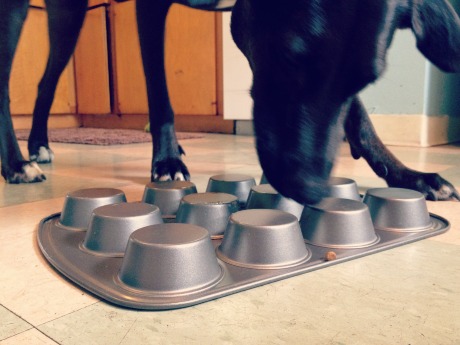
 
At home mental stimulation toy (Image Source)
Some toys can be made at home as well. These are similar to food puzzles in that they will make your dog work for the kibble. You can take an old muffin tin and place a kibble in each muffin area. Then place a toy or ball or something that your pet will have to remove in order to get to the kibble.
 
Homemade mental stimulation toy (Image Source)
Remember when using any of the food related toys, try to use your dogs own food with only small amounts of treats. Our goal is to entertain them without causing unwanted weight gain.
 
Food puzzle toy (Image Source)

There are many websites out there that offer suggestions on toys for your dog’s mental health. Many pet stores have also started carrying certain toys to help address the need for mental stimulation in our pets. 

Friday, December 5, 2014

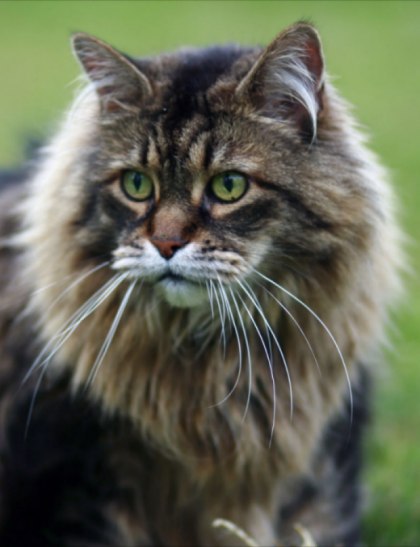
Breed Focus: Maine Coon

Maine Coons tend to be another breed of cat that is fairly well recognized. This is mostly due to their large size. On average they will range from 9-18 pounds (there are reports of larger cats, but many of these are considered overweight). They can make excellent pets but will need some level of activity. They were originally used for mousing and are VERY good at this job.
Most of these cats have long luxurious coats that will need regularly brushing typically at least weekly. As far as health concerns go, overall they tend to be a fairly sturdy breed. Two conditions to be aware of are hip dysplasia and hypertrophic cardiomyopathy. Hip dysplasia occurs when the structure of the hip joint do not fit together properly. Over time this will cause pain that will lead to an abnormal gait. Hypertrophic cardiomyopathy is a condition in the heart where the muscles of the ventricles become abnormally thickened. This can lead to trouble with properly pumping blood and regulating blood pressure. For more information on this condition please click here.
Many people are drawn to the Maine Coon breed due to their large size, but they truly have great personalities! They love to interact with their family but can also be independent if needed. While they do need activity, it is not necessary for them to be kept outdoors. They can do well with different toys and interactions in the house. If you think the Maine Coon may be a good fit for your family please go to the following websites (here, here and here) for more information.


Wednesday, December 3, 2014

Doodle Days #28

Hello! This was an exciting week in my house! We started decorating for Christmas!!

We got a tree!

There are stockings! There is even one for me!

I also got to wear a scarf! I'm ready for the cold weather now!

I also have my 'ugly' Christmas sweater!

Oh and don't forget my Christmas collar! It has two of my favorite things Mickey and Christmas!

Are you ready for Christmas? I know I am!

Monday, December 1, 2014

Environmental Enrichment for Cats

Environmental enrichment is becoming a popular topic amongst cat owners and veterinarians. So what is environmental enrichment? And why are people talking about it?
 
Outdoor enclosure, covered on all sides is safe alternative for entertainment (Image Source)
Cats are undoubtedly very popular pets. Although notorious for sleeping most of the day, cats actually do need entertainment and exercise. To address their physical and mental needs, many people have started to look at enhancing the environment to stimulate our cats’ activity level. The reason this has become more of a hot topic in the cat world is that many people are starting to link lack of activity or stimulation with certain health concerns. These include obesity and issues associated with stress such as cystitis (inflammation of the bladder) and gastrointestinal upset. If we can offer more activity these cats can shed some weight or prevent it from getting put on and hopefully decrease the stress they may be experience.
 
Window perches can be easily moved from room to room and offer great entertainment for cats (photo source)
So what do we mean by enriching the environment? One easy way is to offer various perches throughout the house. This can include window perches that can be moved around or even cat trees. By providing these spaces it gives cats a chance to experience different areas of the house and have different views. It is also a good idea to have a variety of toys, don’t give them to your cat all at once. Store them and rotate them regularly so they don’t get bored with the same toy over and over again.
 
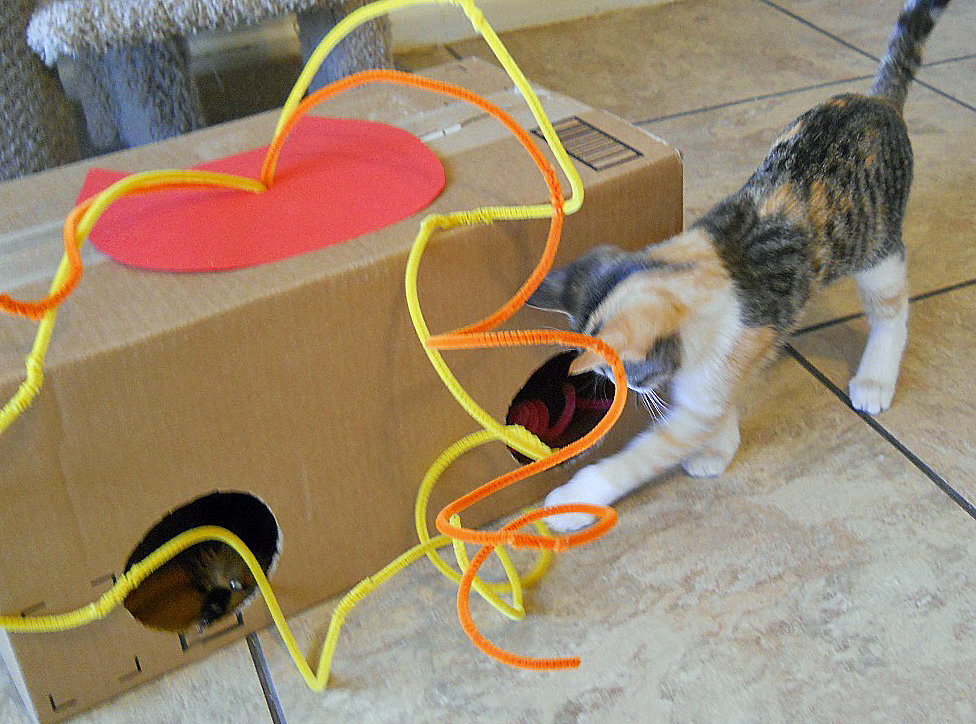
Homemade toys work great too! (Image Source)
Many cats will also respond to different areas to explore. It can be as simple as cutting a hole in a cardboard box and placing toys in there can be a great experience for cats. This again can be easily moved from room to room to change the experience. Other cats will respond well to training them to walk on leashes. Not every cat will enjoy this but if they do it will offer them a whole world of entertainment. Outdoor enclosures that are secure on all sides, including the top, may be another option for cats. This again will let them experience different aspects of the outside world but in a safe/ controlled environment.
 
Another great homemade toy for entertaining your cat! (Image Source)
Additional suggestions and thoughts can be found at the following websites here and here. Getting to know your cat’s personality will help determine which of these options will help enhance their life and make them lead a happier and healthier life!

Friday, November 28, 2014

Breed Focus: Papillon

The name Papillon came from the word ‘butterfly’ to describe the shape of their ears. Their main purpose based on their history appears to be companionship. There are pictures dating back to the 16th and 17th century showing them on the laps of the more wealthy families. Overall they have playful and fun attitudes and fit in well with most families.
Their petite frame does lend them to adapt to most living environments. They can fit well into a small apartment. Although their coat is long and will require regularly brushing, it may not require the intense grooming other long haired dogs do since it is lacking an undercoat layer.
There are a coupld of health concerns to be aware of before adding a Papillon to your home. Smaller dogs do tend to have more issues with dental disease and with that may require more frequent dental cleanings. They are also prone to collapsing trachea which can lead to coughing, especially when excited. (For more information on collapsing trachea please click here) Another common condition in smaller dogs is luxating patellas. This is where the knee caps are not secure in their place and can wiggle back and forth. In some instances surgical correction may be necessary. (for more information on luxating patellas please click here) 
Papillons are beautiful small breed dogs that can make a great addition to many living situations.  If you think they may be the breed for you, check out these websites (here and here) for additional information. 


Wednesday, November 26, 2014

Doodle Days #27

Ok so a couple weekends ago I had a visitor! She came to check out my new place! This is Maggie. Ths is a beagle/pug mix. She is also a little smaller than me. 


I just love playing with her! She is great at chase and tugging! We had so much fun all weekend. 
I may be a little taller but Maggie is up for the challenge
We also took a walk around the neighborhood, and played around in the yard. It was a full weekend!
I love to share my toys! Especially if tugging is involved!
It took me all week to catch up on sleep. 


Monday, November 24, 2014

Fungal Fun Facts: Malassezia

A very common fungal infection that many people may not be familiar with is Malassezia. It is commonly found on healthy animals, but does cause symptoms when it is allowed to over grow. Typically this is seen with an underlying allergy, chronic health issue or medication that affects the immune system.
 
Under a microscope the yeast look like foot prints (photo source)
Symptoms of increased numbers of Malassezia include intense itching, body odor, and thickening or darkening of the skin. It can occur anywhere on the body and even affect the ears. It is important to rule out other possibilities for these symptoms as well. Your veterinarian may recommend a full work up to ensure there are no other conditions occurring. This could include skin scraping to rule out mites. Cytology to confirm presence of the yeast and determine if bacteria is also present. They may also look for fleas and other parasites on the outside of the skin.
 
Thickened/Darkened skin due to yeast (photo source)
The most important part of treatment is to determine if there are underlying health conditions, such as allergies or chronic illness, and begin treatment for them. In some cases where the skin is not severely affected shampoos and lotions may be enough to manage the yeast and get them back to a normal state. In more advanced cases oral medications may be needed. If oral medications are needed your veterinarian may recommend blood work (if they have not done so to rule out other conditions) to ensure that the liver can metabolize the medication appropriately.
 
Elephant like skin due to yeast (photo source)
Many times if the underlying issue is a chronic condition, for exam allergies, there will be times where the yeast numbers will grow. Catching the signs early can help minimize the chance of the condition worsening. Contacting your veterinarian right away can help determine which protocol will work best for your pet! For more information on Malassezia please visit this website.