Wednesday, January 14, 2015

Intervertebral Disk Disease

Anatomy of the disk and spinal cord. (Image source)
Intervertebral Disk Disease is a broad term referring to a disorder in the spinal column. This condition is most commonly seen in short leg long backed dogs. (Think dachshund, basset hound, shih tzu, and Pekinese breeds.)
 
Good advice for any breed! (Image Source)
Typical presentation for this condition is acute pain. Many patients will seem uncomfortable when laying down or have difficulty using their back legs. They may also have a hard time navigating stairs or refuse to jump when they normally would. The pain can be anywhere along the spinal column. It comes from the disk being inflamed and pushing on the spinal cord. Depending on the degree of inflammation this pressure puts on the spinal cord, it could lead to temporary or permanent paralysis.
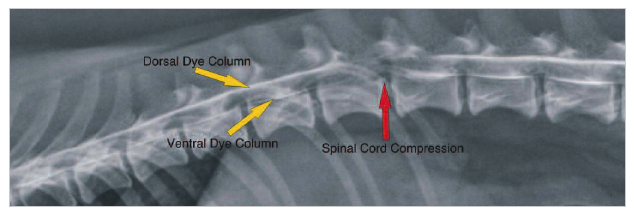
 
X-ray with special dye showing compression of spinal cord (Image Source)
In mild cases radiographs (x-rays), can be used to show if there are boney changes along the vertebrae. These can typically be managed with strict cage rest and medications. These medications will include those to decrease inflammation, pain and possibly muscle relaxation. The most important aspect of treatment however is CAGE REST. With constant motion, inflammation will continue and could lead to permanent damage. In more severe cases referral to a specialty clinic may be necessary. Here they may look at advanced imaging such as a CT scan or an MRI. This will help them pin point the lesion and proceed with surgery if necessary.
 
Typically surgery will require a very large incision! (Image Source)
Surgical intervention is used in very advanced cases. Typically a portion of the vertebrae is removed to relieve some of the pressure placed on the spinal cord. Surgery is used to alleviate pain but also hopefully preserve limb function, if we intervene quickly enough. In some cases their limbs may never function normally again. They may need help moving and this is where carts may be necessary.
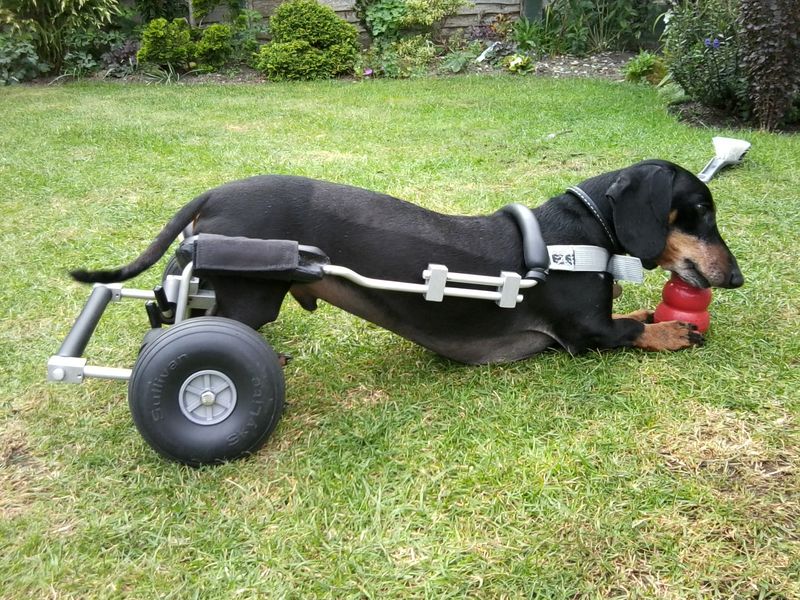
 
Many dogs in carts can lead happy lives! (Image Source)

Getting your pet into the vet at the first sign of illness may help minimize their risk for more advanced disease. It will also help make them more comfortable. For more information on this condition please view the following website here.

Tuesday, January 13, 2015

Toxin Tuesdays: Lilies

The Easter Lily can lead to serious health problems in our cats! (Image Source)
Flowers are a great gift and a way we show our appreciation or affection for someone. Did you know that there are some flowers that can be toxic to our pets? Today we are going to look at the Lillium family which poses the greatest risk to cats. Just because the word Lily is in the name does not mean it is toxic, however you need to verify the species before bringing it into your home with pets.
 
Make sure your cat isn't chewing on your fresh cut flowers!  (Image Source)
The most common toxic species include the Easter lily, the tiger lily, the Japanese snow lily and the daylily (member of the Hemerocallis family). If these flowers are present in your bouquet best to leave them at work or where your cat friends cannot get to them.
 
No question this cat got into pollen! It needs a bath and a vet visit! (Image source)
Cats are naturally curious so new items in the house will be very enticing to them. Most parts of the plants are considered toxic, so even pollen exposure can lead to issues. If you notice your pet has been chewing or playing with the flower and there is pollen on them it is best to rinse them off then call your veterinarian immediately.
 
He may not be happy about it, but a bath could save your cat! (Image Source)
The symptoms for exposure can range from vomiting and diarrhea to sudden kidney failure. It is very important to start supportive care of fluids to protect the kidneys from further damage. It is possible that even small amounts, as little as one to two pieces of the plan, can cause irreversible kidney damage and even death. In extreme exposure situations you may even note neurological signs such as seizures or muscle tremors.
 
Iv catheter in place and ready for fluids (Image Source)

Once at the veterinarian blood work may be obtained to ensure that the kidneys are still functioning appropriately. Then, as mentioned above, with known exposure it is best to start fluid therapy to protect the kidneys. At this time there is no antidote for lily poisoning. Avoidance is the best option. If exposure does happen, quick and aggressive treatment gives our feline friends the best chance of survival without any permanent effects. 

Friday, January 9, 2015

Breed Focus: Bloodhound

Bloodhounds are probably most recognizable for their very saggy skin. It has endeared them to pet owners for years. From a working stand point however their nose is excellent and they thrive in search and rescue situations. There are several things to consider before brining a bloodhound into your home.
 
Bloodhounds have lots of extra skin that gives them a very saggy appearance (Image Source)
While their skin is very adorable, it can sometimes become malodorous. Although they are short hair dogs, they will require regular grooming to keep their odor at bay. This breed will also do better with a family that does not mind their vocalization. Howling and baying definitely come with the territory when you own a bloodhound. They are extremely intelligent and will require a gentle but firm hand for training otherwise their stubborn nature can get out of control quickly. Finding a training facility that is equipped for scent work and training may really benefit your bloodhound.
 
This would be a very loud party! (Image Source)
There are several health concerns to consider prior to bringing a bloodhound home. Keep these in mind when researching the breeder or rescue before adoption. As with many large breed dogs, hip dysplasia is common in this breed. Bloodhounds are also prone to elbow dysplasia. Caring for their joints will be a life long commitment. Another condition to keep in mind with this breed is dry eye. This is where the tear glands are not producing enough liquid and the eyes become very dry. They will present with thick green mucous discharge and be VERY red. Many times they will need a life long medication to stimulate tear production. Another condition prominent in large, deep chested breeds is gastric dilatation (bloat). For more information on this condition you can click here and here. 
Lots of wrinkles = one adorable puppy! (Image Source)
Bloodhounds can make excellent companions especially for an active family. If you enjoy the outdoors this could be a good fit for you! For more information on bloodhounds please visit the following websites here and here. 


Thursday, January 8, 2015

Doodle Days #33

Hello Again! Well the new year is here and in full swing! I didn't have time last week to tell you about my Christmas presents!
Even though I'm big I like small toys!
 On Christmas I got two new toys. One was a green little dog elf and the other was a small Rudolph ring! I love them. Sometimes I have to take a break from playing because I get tired and just need to rest my head.
I like to have all my toys near me. They are fun to play with and double as a pillow!

Sometimes it is just more comfortable to rest your head for a minute!
The biggest surprise was my very own Olaf! I love him!! He was a gift from my person's sister! She came to watch me this weekend and brought my present and I love him! He is cuddly and gives warm hugs! (Which we need right now!)
My very own Olaf!!!
Just hanging with Olaf and the bumble and a snake. 
I hope the new year is treating you all as well as it is me!
Only a week into the new year and I'm already exhausted!

Wednesday, January 7, 2015

Pancreatitis

Pancreatitis is inflammation of the pancreas. It is a condition that typically presents with vomiting, diarrhea, dehydration and painful abdomen. This particular condition is a very good reason to visit your veterinarian if your pet is not feeling well. If left untreated patients can become very sick and even require extended hospitalization.
The pancreas plays an important role in excreting the enzymes that help digest food. Another important job of the pancreas is to secrete insulin to keep our glucose levels in check. When the pancreas becomes inflamed the enzymes are released without food being present in the body so the enzymes begin to digest the body itself and cause even more inflammation which perpetuates the cycle. This can be extremely painful and most pets will stop eating. In some cases the glucose regulation is disrupted and patients can become diabetic making them even more sick. Once pancreatitis is resolved they may or may not still require treatment for diabetes.
 
New snap tests can help diagnose pancreatitis more quickly (Image Source)
Pancreatitis can be diagnosed via ultrasound or in some cases there are specific blood tests that can be used to identify if the pancreas is inflamed. Treatment for most cases in dogs require fasting to allow the body to relax and medications to coat the lining of the gut somewhat like a band aid. Most patients will benefit from supportive care in the hospital such as intravenous fluids and injectable medications to reduce stomach acid and calm the digestive tract down. Some require antibiotics due a secondary infection. Pain medication is also a staple for treatment. This condition causes quite a bit of discomfort and is very difficult to help patients feel better and the body to become less stressed without appropriate pain control.
 
Iv fluids and supportive care are sometimes required for pancreatitis (Image Source)
While being treated it is important to try and identify an underlying cause to prevent this from occurring in the future. Some pets are predisposed. This includes the schnauzer breed. Others can occur if a fatty meal or treat is ingested which their body is not accustomed to eating. More serious cause could include a tumor on the pancreas or unregulated diabetes. There are several classes of drugs that can also cause inflammation in the pancreas. These drugs will need to be avoided in patients suffering pancreatitis in the future so as not to cause a re-occurrence.
 
Avoid greasy and fatty meals to keep the pancreas happy! (Image Source)
Pancreatitis is a manageable condition, but it is important to remember it is quite serious. Many pets end up spending one to four days in the hospital. While supportive care is helpful, some patients may still succumb to this condition. This is another great reason that if your pet is not feeling well to visit your veterinarian early in hopes of preventing worsening their condition. For more information on pancreatitis in dogs you can visit the following websites here and here.


Tuesday, January 6, 2015

Toxin Tuesdays: Rat Bait

There are a lot of things out pets can get into in our homes and yard or even the outside world. Some items are benign and won’t cause any problems while others can be life threatening. We are going to take a look at some of the toxins out pets can encounter and what to do when exposures occur.
Rat bait is a very common toxin that pets like to ingest. It is designed to be appetizing to animals so that the rats will in fact eat it. There are a variety of different types of rat bait available for purchase and in the very near future the active ingredient profile will be changing. If you have to have rat poison down one of the best things you can do is snap a picture of the container so that way we know what the active ingredient is and how best to treat it.
 
Bruising on a dogs belly can be from a clotting disorder (Image Source)
Some of the most common types of rat poison are those containing baits that cause issues with coagulation or blood clotting. This will terminate the rats by them slowly bleeding internally. The same is true for our pets. Symptoms usually range from lethargy, bruising, blood in stool or vomit, to coughing and inappetence. If there is rat poison in the area it is imperative that we keep our pets away from it. They can become very creative in how they ingest these materials.
 
Blood transfusions are sometimes necessary (Image Source)
 Depending on when the exposure happened will dictate treatment. If it is recent, typically within 1 hour, we can try to induce vomiting and remove as much of the bait as possible. Then we can give a material called activated charcoal to help bind remaining bait in the stomach before the pet absorbs it. We will also look at blood work to determine if the clotting factors are affected. If the clotting time is prolonged typically we can treat with vitamin K which is a precursor for many clotting factors and will help decrease the symptoms. There are severe instances where blood transfusions and supportive care are necessary. While there are treatment options pets can still succumb to this even with aggressive treatment.
 
Keep your pet happy and toxin free! (Image Source)


In the coming years this will not be the case and we will see a different ingredient profile which will change the way we treat exposures. Again, I cannot stress enough the importance of knowing the active ingredient in the rat bait used. This will prevent any unnecessary delays in treatment. If you see your pet ingest one of these toxins call your veterinarian immediately. The sooner we can start a treatment protocol the better chance we have for a positive outcome. For more information on rat poison please view the following websites here and here.


Friday, January 2, 2015

Breed Focus: German Shepherd

Police dog in training ;) (Image Source)
Many people are able to recognize the German Shepherd breed. Typically they are well as the primary dog used by police officers. Due to their extreme intelligence and strong will, they will require a firm hand and thorough training. This is not the breed for a first time dog owner. However once trained, they can become a great addition to many families.
(Image Source)
 German Shepherds do tend to shed quite a bit, so you will need to be prepared for regularly vacuuming or sweeping around the house. Just to re-iterate they will also need training starting at young age. This is a large breed that is intelligent and stubborn, it will be important to lay down the home rules early to avoid issues later on in their life. They will also need an active family that can provide adequate mental and physical stimulation for them.
As a breed, there are several health concerns to be aware of prior to adopting your German Shepherd. Hip dysplasia is probably one of the most common health issues seen in this breed. It is important if purchasing a puppy to ensure that both parents were certified free of dysplasia. This will decrease the risk of your puppy developing this condition. For more information on hip dysplasia you can go here. Another condition that is seen in German Shepherds is degenerative myelopathy. This is a disease of the neurological system which causes a slow loss of the ability to walk. There is no cure but there are therapies that can help delay the onset. Finding a breeder that screens their parent dogs is one way to minimize the chance of your pet having this condition. You can find more information on degenerative myelopathy here. One other big thing to consider when looking at breeders is that there have been studies that show that temperament is to some extent hereditary. Make sure you meet both parents if possible and that they are friendly and approachable. This will again minimize the chance of your puppy being shy and scared of people.

The German Shepherd is a great, sturdy breed. If you are looking for a dog to train and be a loyal companion this could be a great fit for you. For more information you can visit the following websites here and here.